Spindex launch shows crypto casinos are entering a more data-led phase
18 Jun 2026Read More
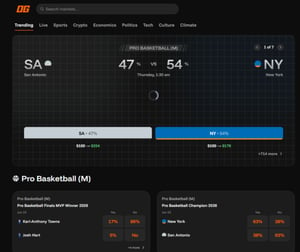
World Cup is exposing a growing split between bookmakers and prediction markets
- Football’s biggest event is driving both formats
- Spain has already moved to block major platforms
- Global demand is rising faster than regulatory alignment

The 2026 FIFA World Cup is not just producing betting volume.
It is exposing a widening divide between traditional bookmakers and prediction market platforms, with the same tournament now creating very different commercial opportunities depending on where users live and how regulators classify the product.
It is an important split, especially with football’s biggest event being a perfect stress test for event-based wagering. It brings huge public interest, constant match-by-match trading and a global audience willing to speculate in real time. For bookmakers, that is familiar territory. For prediction markets, it is a chance to prove that tradable sports contracts can compete for the same attention with a different format and a different user experience.
But the tournament is also showing how uneven that opportunity has become. In the United States, sports-linked event contracts have continued to gather visibility and volume. Outside the U.S., the path is far less straightforward. Spain has already moved to block Polymarket and Kalshi for operating without the gambling licences required under local law, making clear that some regulators are not interested in the argument that event contracts should be treated as something meaningfully separate from betting.
That creates a very different commercial picture from the one facing mainstream bookmakers. Licensed sportsbooks already know how to market into a World Cup cycle. They understand the local rules, the customer habits and the economics of a tournament that drives repeated activity over several weeks. Prediction-market platforms are trying to tap into the same football attention, but in many jurisdictions they first have to clear a more basic hurdle: whether they are even allowed to operate.
For the wider crypto betting sector, this is a useful marker of where the category now stands. Prediction markets still look like one of the more interesting adjacent products in digital wagering. They offer flexible pricing, tradable positions and a format that can feel more dynamic than a normal sportsbook bet slip. But the World Cup is making clear that demand alone is not enough. Access is becoming just as important as product quality.
That raises the pressure on operators from both directions. Bookmakers now have another reason to sharpen their football-led products, promotions and user experience, because event markets are competing for the same audience where access is available. Prediction platforms, meanwhile, have to prove they can survive in a world where one regulator may tolerate sports contracts while another treats them as straightforward gambling and shuts the door.
The broader takeaway is that prediction markets are no longer only fighting over whether the format is interesting. They are fighting over whether it can become a genuinely global product. The World Cup is showing both the upside and the limitation of the model at the same time. Interest is clearly there. The question is whether regulation will let that interest turn into a stable international business.
Latest News
-
 Casino News
 -
WSOP x SolanaWSOP crypto buy-ins show why poker suits digital payments15 Jun 2026Read More
-
Casino PromotionsStake puts World Cup promos front and centre as tournament betting goes live12 Jun 2026Read More
-
Industry NewsFanDuel Predicts teams up with Crypto.com and OG as event trading moves closer to the sportsbook mainstream10 Jun 2026Read More